• Current Blog
  • 2022-2023 Blog
  • 2019-2020 Blog
  • 2017-18 Blog
  • 2015-16 Blog
  • 2013-14 Blog
  • Past Itineraries
    • 2022-2023 Itinerary
    • 2019-2020 Itinerary
    • 2017-18 Itinerary
    • 2015-16 Itinerary
    • 2013-14 Itinerary

Morondava, Madagascar: Jim is a just big, fat loser, Part III

September 10, 2017 Jim 3 Comments

This is Rado, a Malagasy tour guide I introduced myself to at the airport in Toliara, a very small town on Madagascar’s southwest coast. It’s a third world town in a third world country and it’s about as far from the First World as you can get. Geographically as well as metaphorically.

Nevertheless, everyone in the airport seemed to be wearing an American brand name. We saw Nike, Abercrombie & Fitch, Levis, American Eagle, Aéropostale, Hollister, Polo, and our friend Rado is sporting a Mossimo shirt.

So although this could easily be a story about the ubiquity of American brands and culture around the world, it’s not. It is instead a story about what a big, fat loser I am.

In earlier stories, I told you how I had misjudged the remarkable athletic ability of Wayne Gross, a childhood friend and future Major League Baseball player, and how I had a few years later misjudged the remarkable musical talent of classmate and famous composer Jimmy Webb.

Now let’s complete the trilogy by taking one of those familiar treks to my sordid past before we come back to the present:

Back in the days when I was an advertising creative director, our ad agency was located in Orange County, which was in those days an advertising Siberia. No one went there voluntarily and most of those who did go felt as if they had been exiled to another planet far, far away from the Promised Land of Los Angeles and its big time Wilshire Boulevard ad agencies.

That made it really very difficult for us to find talented, experienced writers and art directors, so I resorted to teaching copywriting classes at the University of California Irvine and Cal State Fullerton in hopes of finding young talent that I could hire and train.

As you may have guessed, I did not teach your average class. Bob Colombatto, my first boss, always said, “My job as creative director is to create an environment where other people can be creative.” I followed that same philosophy. I wanted my classroom to be as much like a real ad agency as possible, so I aided and abetted behavior just short of anarchy. Students were encouraged, not penalized, for shouting out ideas or comments. They were pushed to go too far in search of creative solutions. Extra credit was given for being funny.

So the classes I taught were fun. The students and I laughed. A lot. There was a lot of energy in the classroom. I praised, cajoled, insulted, prodded, did everything I could to help students get over their fears of thinking outside the box.

The classes were so unlike anything any of the students had ever experienced in school that they began bringing friends and relatives to class. Attendance was usually over 100%.

One quarter at Cal State Fullerton, I had a very smart, very attractive, very funny young woman in my class. She eventually brought her boyfriend to class. He was a very cool-looking, long-haired guy who sat in class and just observed, saying nothing. I always asked students to introduce whatever guests they brought along and when I asked Christine to introduce her guest, she said, “This is my boyfriend Moss.”

While talking to her before class the following week I asked, “What is your boyfriend studying?”

“He’s not really studying,” she replied. “He’s going to be a fashion designer.”

“That’s cool,” I said.

But what I really thought was, “This poor devil is going to starve to death.”

Well, Moss turned out to be Mossimo Giannulli. And a year after my incisive assessment, he had become the hottest designer and manufacturer of beach and casual wear in the country. His brand, which is his first name, was everywhere. Here it is 30 years later and his signature logo is known everywhere. Even in remotest Madagascar.

So I am proud to add Mossimo to the list of people whose talent I totally misjudged.

He’s famous, but I’m not.

He’s a gazillionaire, but I’m not.

He’s now married to a movie star (not Christine), but I’m married to Jamie.

So at least I beat him on that one.
Isalo National Park, Madagascar: Sufferin’ sapphires

September 10, 2017 Jim 1 Comment

When we were planning this trip, Jamie read that Madagascar has huge problems with sapphires. Or to be more accurate, huge problems with sapphire mining. BrilliantEarth.com explains the problems:

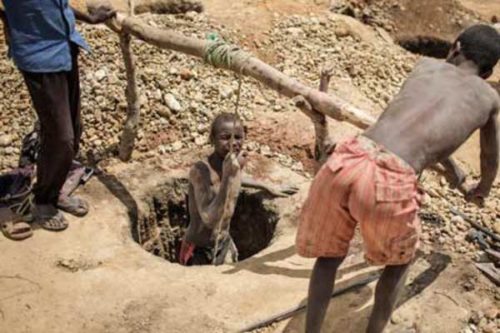
In Madagascar, where rich deposits of sapphires were discovered just a decade ago, a Wild West economic situation has led to dangerous working conditions and a highly unregulated industry. Allegations of child labor and abuse have also marred the gemstone trade in Madagascar. Children have been used for their small size and agility, often required to climb into small holes in extremely dangerous situations to see if gemstones are present.

Illegal mining activities are commonplace, often found in locations with poor safety standards. Injuries are common, caused by dangerous conditions including falling shards and rocks, collapsing pits, and underground fires, which can cause smoke inhalation. Little to no access to health care services exacerbates these dangerous working conditions. Most countries have yet to embrace fair labor practices in sapphire mining.

Minimal regulation in sapphire mining can also lead to spread of disease and water shortages. Clean water for drinking can be affected by sedimentation, while standing water found in open mine pits can potentially breed mosquito populations that increase malarial diseases.

Tens of thousands of miners and gem traders — virtually all male — have abandoned their villages and their families and poured into the mining areas.

In the tropical northwest corner of the country, they’ve destroyed thousands of acres of protected forest in search of gems.

Here in the southwest region, near Isalo National Park, there’s a village named Ilakaka. Before the sapphire rush, Jamie and I could have counted all its residents on our fingers and toes. Now its population is pushing 60,000. Most of those people, if they’re lucky, live in mud huts with thatched roofs, but the sapphire dealers, mostly Sri Lankan, live in “grand maisons” (big houses).

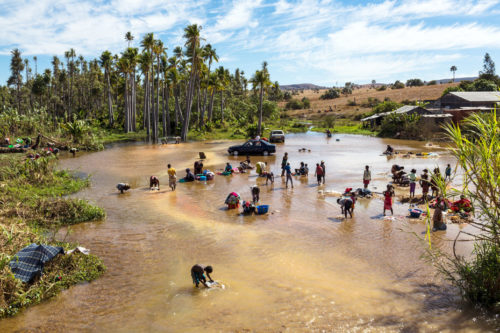
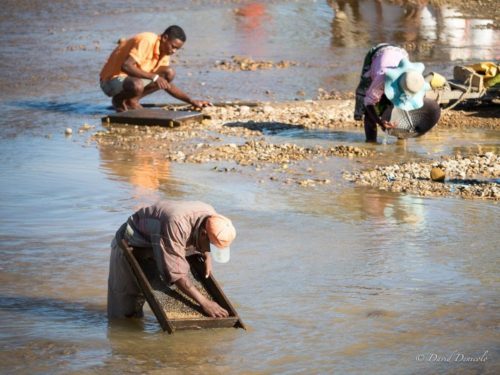
Our driver stopped his car on a bridge over the river to show us all the individuals panning for sapphires right in the middle of town. Men, women, and small children. All looking to strike it rich on sapphires.

Of course, striking it rich means something completely different here than it means at home in America. Here it might mean a well for water or sporadic electricity or even just a pair of shoes. Used shoes.

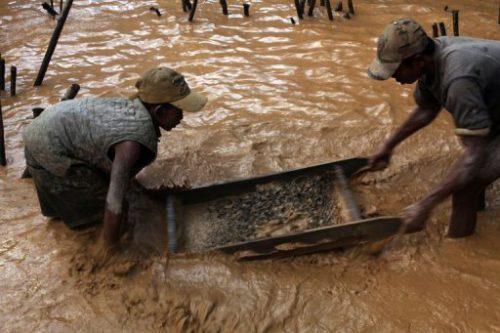
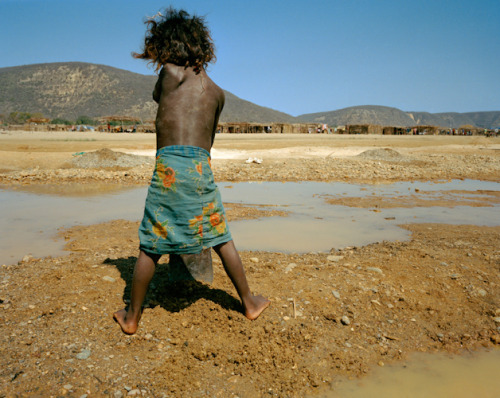
Here are some photos I grabbed off the internet that show just how primitive the sapphire mining process can be.


Isalo National Park, Madagascar: Luxury in the midst of gut-wrenching poverty

September 10, 2017 Jim 2 Comments

Sometimes life grabs you by the lapels and gives you a good shaking. That’s what’s happened to us the last couple days.

We took two flights and drove more than three hours to get to a great resort called the Isalo Rock Lodge. It’s pretty damn fancy for this neck of the woods. Or any neck of the woods, for that matter.

We have a very contemporary room with polished concrete floors, floor to ceiling sliding doors than open onto a stunning view of the Isalo canyon. We dine in a restaurant overlooking that same view. We have foot and neck massages scheduled for this afternoon. In other words, this place could easily be in Palm Springs or Sedona.

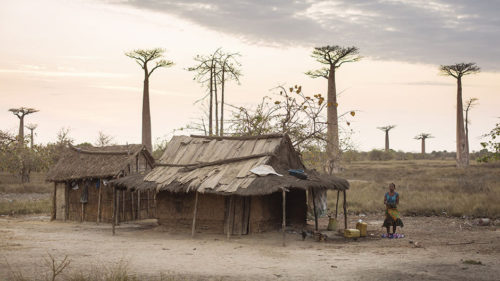
Yet it sits at the end of a road that passes through heartbreaking poverty. Poverty you cannot imagine unless you’ve seen it with your own eyes.

Hell, we watch the Travel Channel all the time and they never show us grinding poverty like this.

So do us a favor. Look at the photos below and be grateful — very grateful — for where you live and when you live, because you are among the wealthiest, most privileged people who have ever walked this earth.

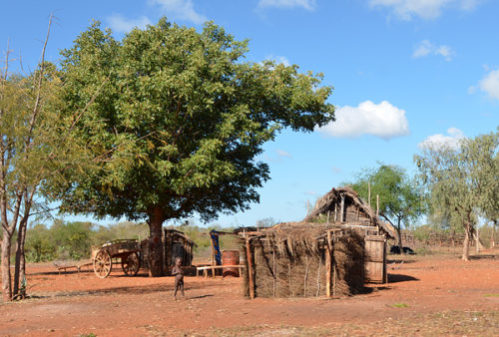
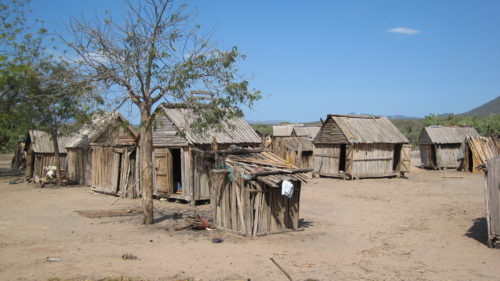
If the shacks above and below are out of the ordinary, it’s only because they are far nicer than so many of the mud huts out here.

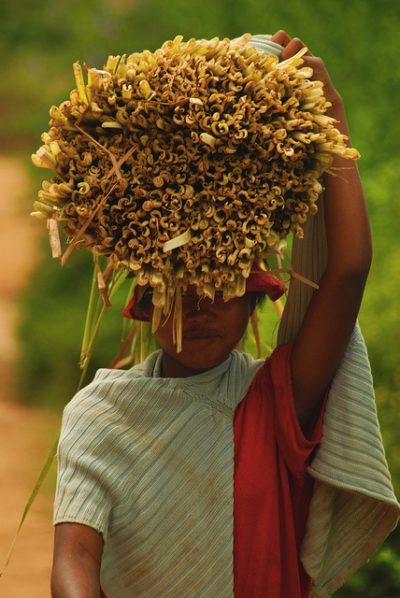
You see many women carrying bundles of sticks or twigs or branches or whatever you’d like to call them. I’ve googled and googled and can’t find any info that tells me if they are harvested crops or kindling for fires or something completely different.

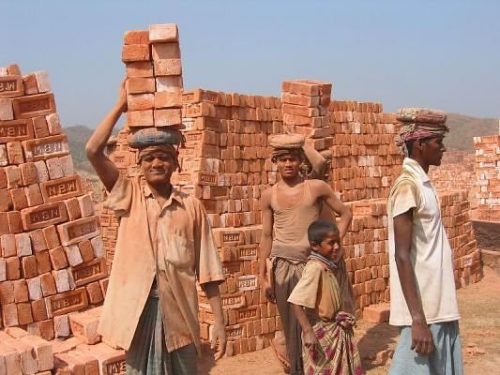
Everyone makes bricks. I read that the soil in rice paddies is perfect for making bricks, so as soon as rice season ends, the brickmakers begin their labors. Not only do you see adults transporting bricks on their heads, but little boys have toy trucks designed to carry one brick. So you see them walking down the street towing their toy trucks with one brick payloads.
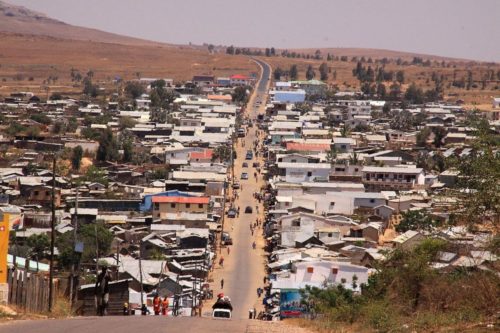
This is Ilakaka, the town that had 40 residents before sapphires were discovered. It looks far more prosperous from a distance.
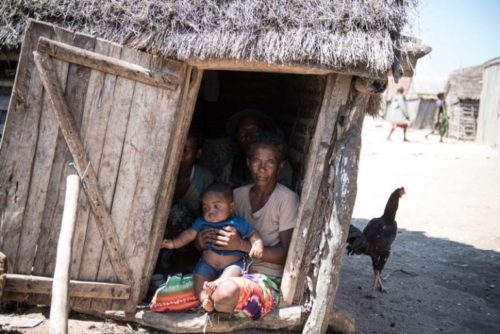
Most Americans wouldn’t have a tool shed or a chicken coop in a condition as poor as many of the homes.
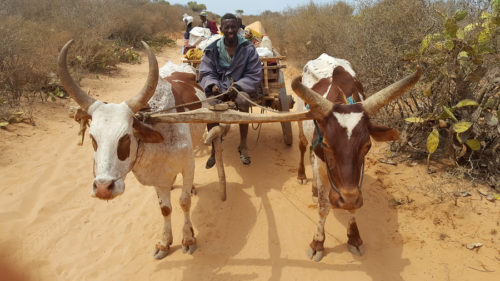
Call me stupid. I guess I just didn’t realize that there are still people using cattle drawn carts for transportation.
Isalo National Park, Madagascar: Jamie and the boys

September 7, 2017 Jim 6 Comments

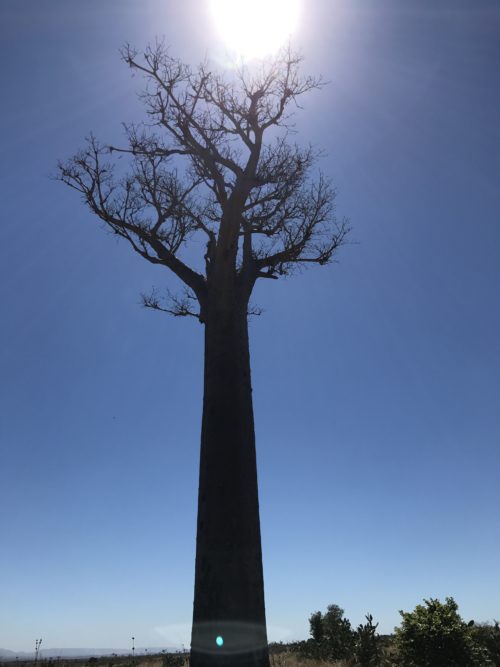
When we stopped to take a photo of the giant boab, there was a gaggle of boys playing about 100 yards down the road. As soon as we stopped, they came running.
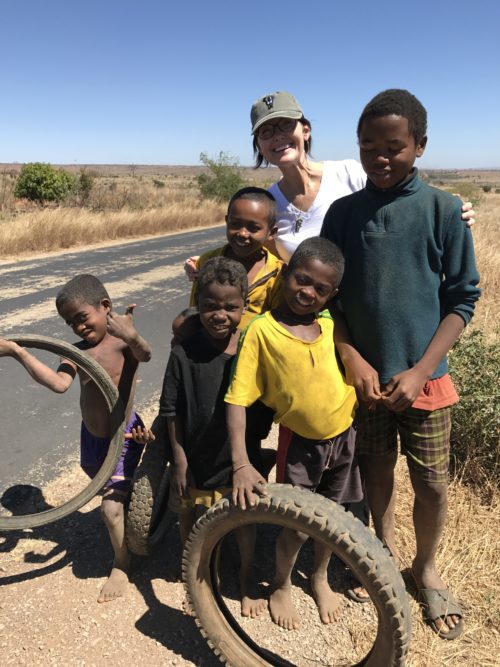
It’s easy to see which one’s the ringleader — the kid in the yellow shirt. Jamie said, “Can I take your photo” and he looked at the others and in heavily-accented English said, “Fo-to? C’mon, let’s take a fo-to.” As Jamie said later, what he meant was, “C’mon, guys, I think we have a live one here.”

The kid’s probably only six or seven, but he already has swagger, doesn’t he? Look at that pose. Even the much older kids deferred to him.

Also check out the little kid to the far left. He has plenty of swagger of his own with that thumbs up pose.

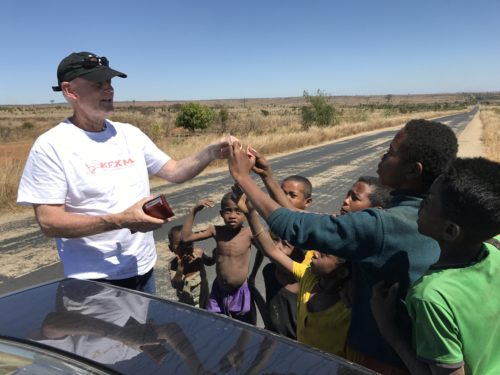
After the photo (above) was taken, I took out my wallet intending to reward them.
We had been warned that thievery runs rampant here in Madagascar. For example, as we crawled through the rush hour streets of Antananarivo last night on our ride from the airport to our hotel, I was looking at my iPhone. It was a warm afternoon and my window was rolled down. The cab driver warned me not to hold the phone so close to the window because someone could easily reach in and snatch it away from me.

So with that in mind, pulling out a wallet crammed full of cash in the middle of all these kids was probably a mistake.

Unfortunately, I didn’t have any change or small bills, so I couldn’t give something to each of them. The smallest thing I had was a 5000 Ariary Madagascar note, worth about $1.

Luckily, our driver noticed that I had mistakenly given them a left over 5000 Rand South African note. “Wrong country,” he said. Good thing, because I doubt that their squalid villages have any foreign exchange offices.

I dug around and found a Madagascar 5000 Ariary note in my wallet and when I pulled it out, they all started grabbing at it. I stopped and had our driver explain to them that they were supposed to share it. The biggest kid initially took the note, but it soon ended up in the hands of the yellow-shirted ringleader.

The littlest kid, the one on the far left, pointed to the ballpoint pen clipped to my collar, and asked if I would give it to him. My reaction, unfortunately, was to think, No, I need my pen. Damn it. I have about ten pens in my iPad case, and I regretted not giving it to him as soon as our car pulled away.

Shame on me. I should have given him the pen and given each of them 5000 Ariaries.

Isalo National Park, Madagascar: One big boab

September 6, 2017 Jim 5 Comments

This monster is called a baobab or boab tree. We came upon it while driving along the road through arid southwest Madagascar. Our driver pulled over so we could take photos.
I don’t want to overload you (or myself) with facts, but it’s official name is Adansonia grandidieri or Grandidier’s baobab. Madagascar is home to six of the world’s nine species of baobabs and no one would dispute that these are the most impressive.

Their massive trunks are covered with smooth, reddish-grey bark, they sport beautiful bluish-green leaves, and they can reach a height of 100 feet. In spring they are crowned with spectacular outburst of white flowers.

But if you think this single boab is impressive, just wait a few days. We’ll be visiting a place called the Avenue of Baobabs that promises to be jaw-dropping incredible.

Kruger National Park, South Africa: “Ahhh, the spots. Always the spots.”

September 6, 2017 Jim Leave a Comment


Vuyani’s guides took us on safari drives in their huge private reserve every morning and every afternoon. Three trucks packed with guests went out for about three hours each time. But we decided we wanted to do a smaller safari in Kruger National Park which is known for having even more animals and even more open vistas.
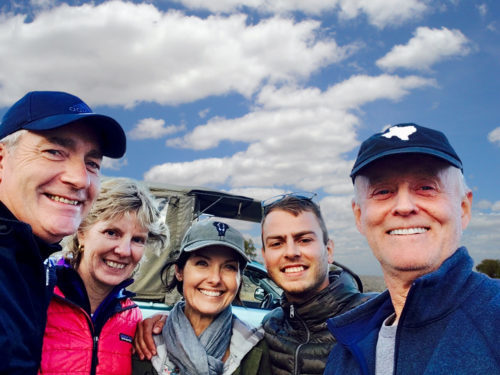
We were told that one other couple would be accompanying us, and much to our surprise, that couple turned out to be our new friends Tony and Angela.

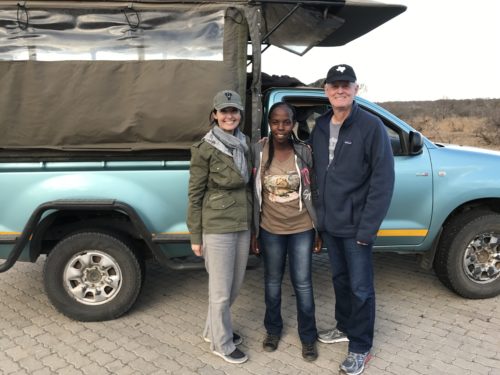
Frank was our guide and Tuli was our driver. They were both great at spotting animals in the bush and positioning our truck to get the best vantage point. Sometimes Tuli would stop the truck or move slowly forward or backward because she spotted an animal long before the rest of us. Other times Frank spotted the animals and communicated almost silently with Tuli to get us in right spot to take photos.

It was a great day with lots of laughs and lots of animals. In fact, we saw four of the Big Five — lion, elephant, rhino, and Cape buffalo. The only one we missed was the leopard.

When Rex, Vuyani’s happy, hulking night guard asked what we saw, Jamie told him we were disappointed that we didn’t see a leopard.

His response, “Ahhh, the spots. Always the spots.”

Vuyani Lodge, South Africa: The Elephant Whisperers

September 6, 2017 Jim 3 Comments

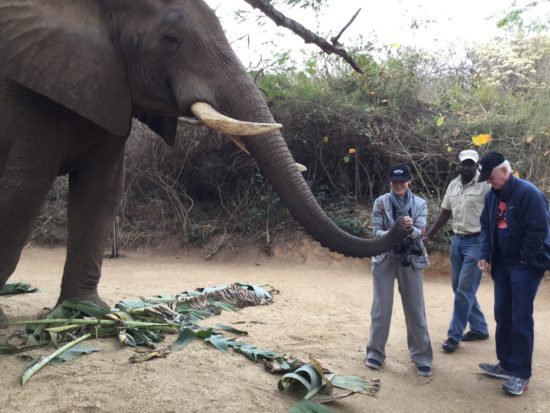
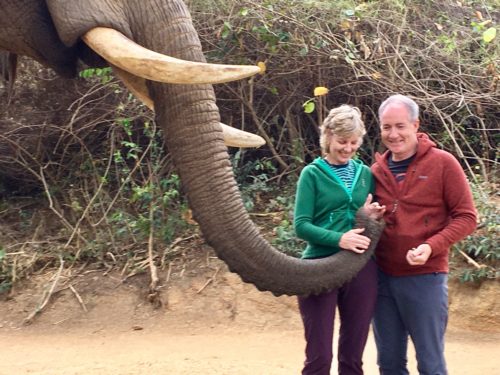
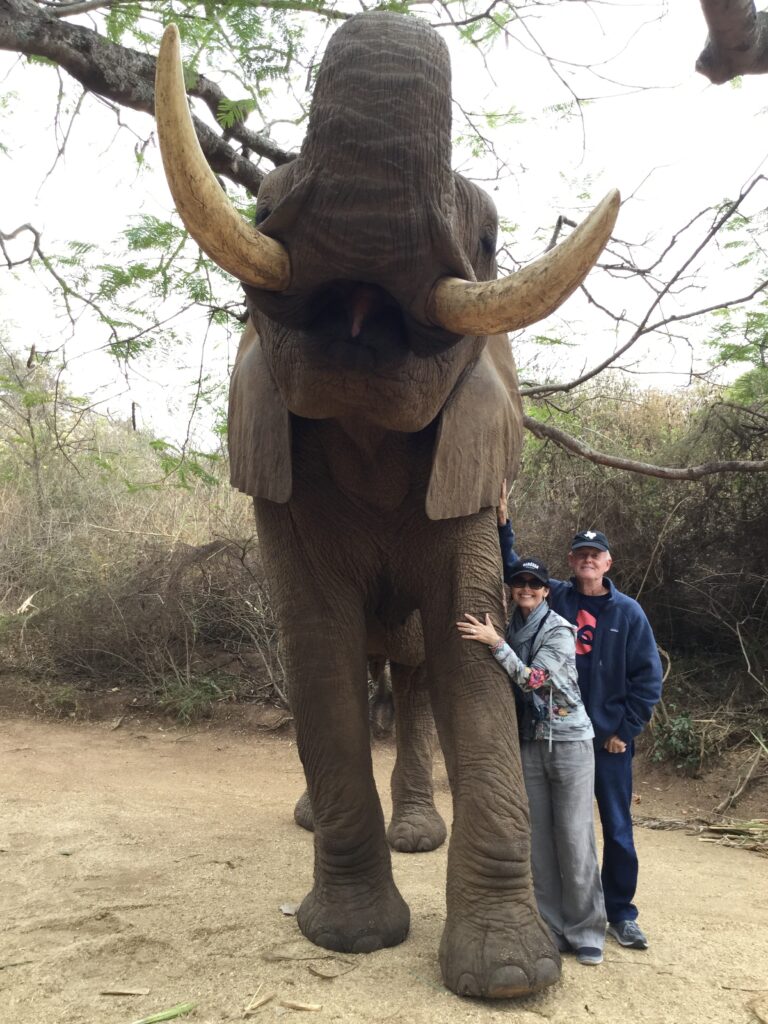
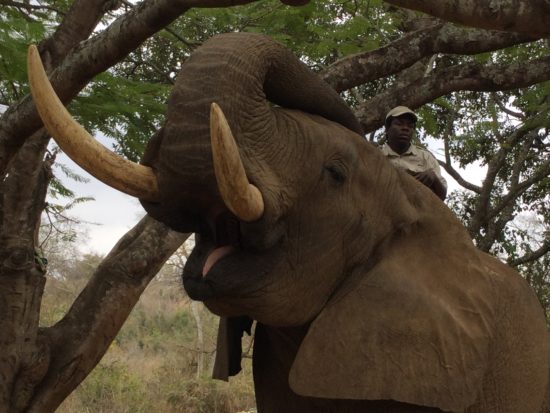
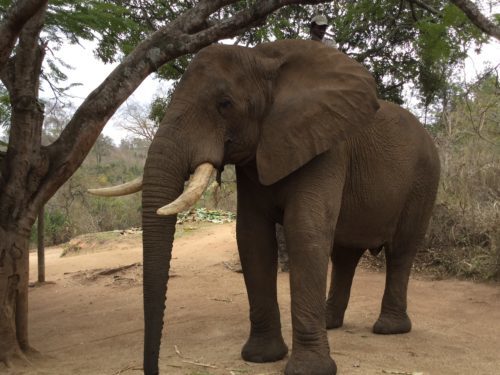
We took an excursion to see the Elephant Whisperers, an elephant rehabilitation and adoption center. It’s a relatively small facility that only houses six elephants.

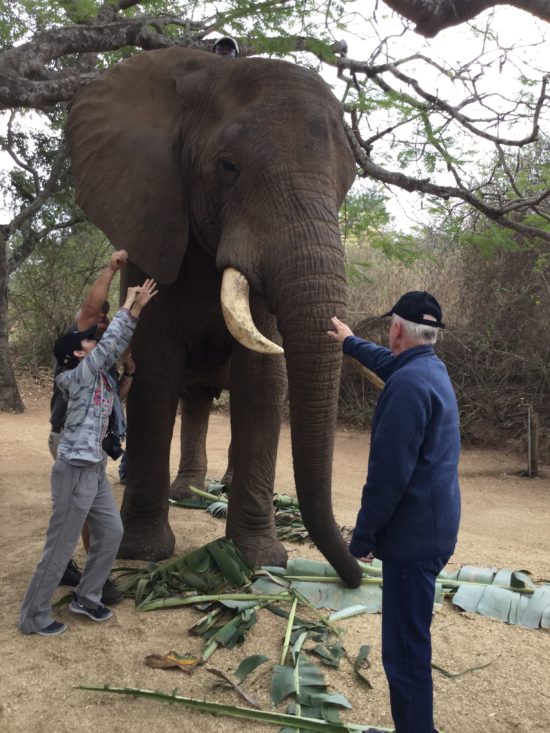
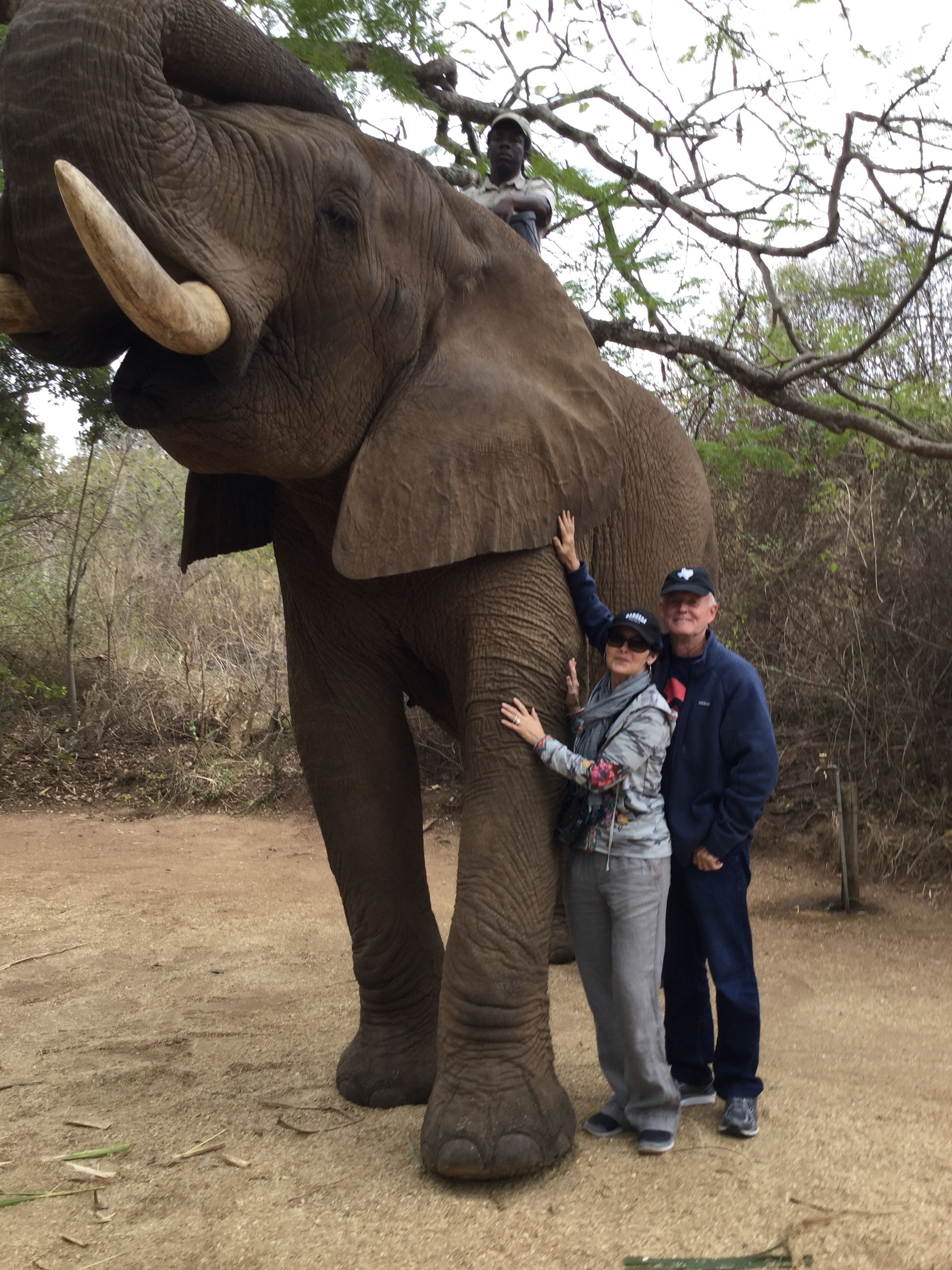
The head pachyderm is a huge 29-year old male named Tembo. And when I say huge, I mean huge.  He weighs in at six and a half tons and towers over the rest of the herd.

Here’s how the Elephant Whisperers website describes Tembo:

“When Tembo was two years old, he was orphaned when his herd was culled. Together with another orphaned elephant, Becky, he was raised by humans. Tembo’s home until he was approximately 18 years of age was in a reserve which bordered crop farms which Tembo regularly raided, causing thousands of rand’s damage. Authorities, faced with a deluge of complaints by local farmers, decided Tembo would have to be destroyed. Fortunately, Rory and Lindie Hensman rescued Tembo, taking him to EFAF, where Tembo enthusiastically embraced his new routines and also interacting with other tamed and trained elephant.”

You might be asking why his family had to be culled (a nice way of saying they were destroyed) when we keep hearing that elephants are an endangered species. From what our guides told us, they are endangered in the wild, but in places where they are relatively safe from poachers, like Kruger National Park, there are too many of them.

Athough elephants have a matriarchal society (much like our house), Tembo has apparently embraced his status as the boss. Nevertheless, he seemed happy to pose for photos with awestruck tourists.


Kruger National Park, South Africa: New friends from the Isle of Arran

September 6, 2017 Jim Leave a Comment

Meet our new friends, Tony and Angela, from the Isle of Arran. We sat with them at dinner our first night at Vuyani Lodge, and then did a bunch of other stuff with them over the course of the next few days.
He’s funny and she’s sweet. Gee, I can’t imagine what the four of us might have had in common.

But you’re probably asking yourself, Where is the Isle of Arran? Well, as Tony explained, it’s the largest island in the Firth of Clyde. What more do you need to know?

Measuring in at just 432 square miles, the Scots might say Arran is just a wee place. And since the island has just a hair over 5,000 people, a considerable percentage of its population disappeared when Tony and Angela left for South Africa.

Oh, by the way, they were in South Africa on their honeymoon.

Congratulations, guys!

It was a real pleasure getting to know you.

Vuyani Lodge, South Africa: “They will bite you on the balls!” UPDATE: Rex up-a-tree photo added

September 5, 2017 Jim 6 Comments

I’m not quite sure how the primary emphasis of this blog went from travel to male genitalia, but that’s where it seems to have gone.

First it was the story of my small d, and now it’s the story of the remarkably vicious South African honey badger.

To tell you the truth, I didn’t even think the honey badger was a real animal. I thought it was apocryphal, like unicorns or griffins or mermaids.

And then I learned otherwise.

We were out on our afternoon safari when a low-slung black and white animal about the size of a small dog darted across our path and disappeared into the scrub brush. Hendrik, our guide, slammed on the brakes of the safari truck, put it in neutral, turned to us, and announced that the animal we had just seen was a honey badger.

“They are the most vicious animals in the world,” Hendrik insisted. “Lions are afraid of them. Even elephants are afraid of them.”

Someone in the truck asked the obvious question. “Why would a lion be afraid of such a small animal?”

“Because the honey badger will bite them on the balls!” he said loudly and with uncharacteristic vehemence. “They will bite a large predator on the balls and not let go! Every animal is afraid of them!”

He was so insistent and his comment was so out of character that I thought he was making a joke at the expense of the tourists.

But back at the lodge that evening, I was speaking to Rex, Vuyani’s always smiling night guard. He asked what animals we had seen that day and I said, “Lions, rhinos, baboons, a honey badger…”

“Honey badger,” he interrupted. “Watch out for honey badgers! They will bite you on the balls!”

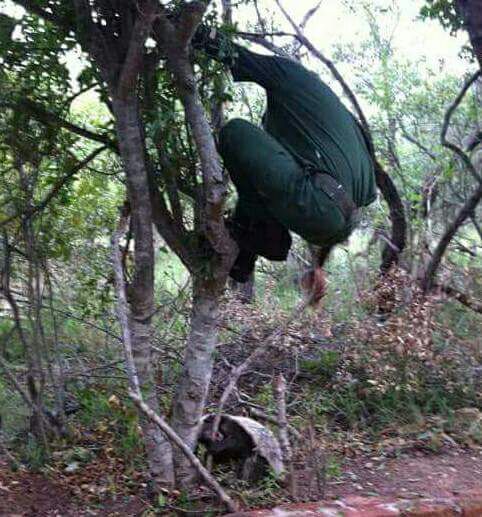
He then told me how a honey badger had found its way to the lodge about a year earlier. It began to get aggressive with some guests, so he attempted to shoo it away from the guest quarters. It turned on him, so he attempted to stomp on it, but it clamped its ugly yellow teeth into his boot. He jumped away and the honey badger came after him, so he did what any rational person would do.

He jumped into a nearby tree and held on for dear life. (I’m trying to get Rex’ photo of this incident, because it’s pretty funny. I’ll post it if it comes my way.) UPDATE: Here’s the photo of Rex climbing up a tree to escape the honey badger.

Damn it, I just looked in my suitcase and it appears that Jamie did not pack my codpiece. How is a man supposed to go on safari and face the dreaded honey badger without his codpiece?

Vuyani Lodge, South Africa: I couldn’t help but wonder

September 5, 2017 Jim 1 Comment


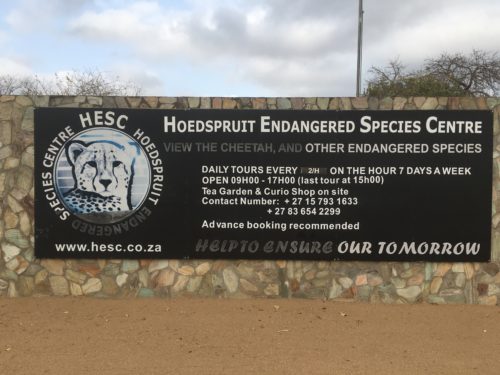
I saw this sign and couldn’t help but wonder if the Hoedspruit Endangered Species Centre has any 68-year old advertising copywriters on display. Lord knows, there are very few of them left in the world.

« Previous Page
Next Page »

Read Random Post

Sign up for the eBlast

This field is for validation purposes and should be left unchanged.
Find out every time
we post a new story.
Sign up now.
Your Name(Required)

Recent Comments

  • Jim on McKinney, Texas: The funniest damn newspaper headline and subhead ever
  • Pete on McKinney, Texas: The funniest damn newspaper headline and subhead ever
  • Cheri on McKinney, Texas: The funniest damn newspaper headline and subhead ever
  • Jim on McKinney, Texas: The funniest damn newspaper headline and subhead ever
  • Rangerwick on McKinney, Texas: The funniest damn newspaper headline and subhead ever

Recent Posts

  • McKinney, Texas: The funniest damn newspaper headline and subhead ever
  • Angaston, South Oz: Dog, dog, not a dog
  • Angaston, South Oz: Dastardly forces conspire to destroy Jamie’s dreams
  • Angaston, South Oz: Introducing the Chicklettes
  • Angaston, South Oz: The farmers at the Farmers Market

Copyright © 2026 · Beautiful Pro Theme on Genesis Framework · WordPress · Log in