• Current Blog
  • 2022-2023 Blog
  • 2019-2020 Blog
  • 2017-18 Blog
  • 2015-16 Blog
  • 2013-14 Blog
  • Past Itineraries
    • 2022-2023 Itinerary
    • 2019-2020 Itinerary
    • 2017-18 Itinerary
    • 2015-16 Itinerary
    • 2013-14 Itinerary

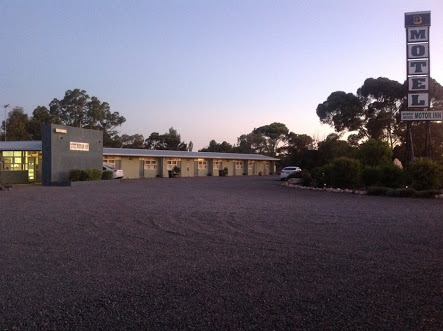
Norseman, Western Australia: The most beautiful hotel in the world

January 23, 2018 Jim 5 Comments

No, we have not traveled to Western Australia. But Jamie’s a little under the weather this week and things are slow between Christmas and New Years, so I’m reliving a few tales of travel past that have never been told on JimandJamie.com:

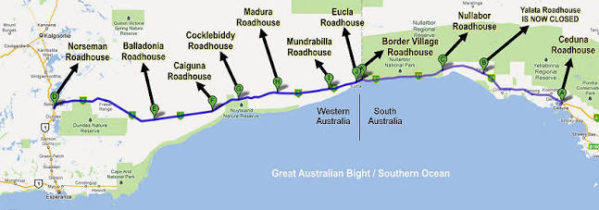
According to Google, it is 747 miles from Ceduna, South Australia to Norseman, West Australia. What Google doesn’t tell you is that they are 747 very long, ugly miles.

Google also says it takes 12 hours and 28 minutes to drive from one to the other. But they don’t tell you is that there is nothing — absolutely nothing — between the two except flat, ugly outback that’s been been baked black by millions of years of unrelenting sun.

Do not mistake the names on the map above — Cocklebiddy, Balladonia, Madura, Mundrabilla, Border Village and all the rest —  for cities or towns. They are merely wide spots in the road where you can fill up with gas, get a crusty meat pie that’s been heating under a lamp for several days past its expiration date, or buy a bottle of much-needed water before you wearily climb back into your car to begin the next leg of your journey across this wasteland.

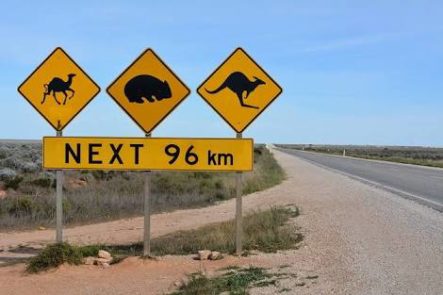
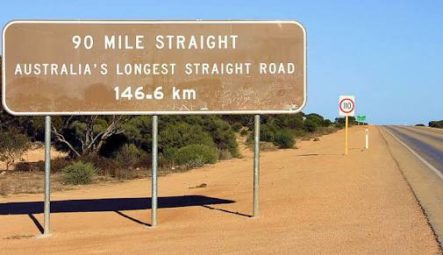
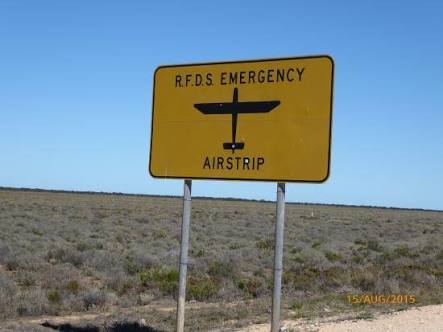
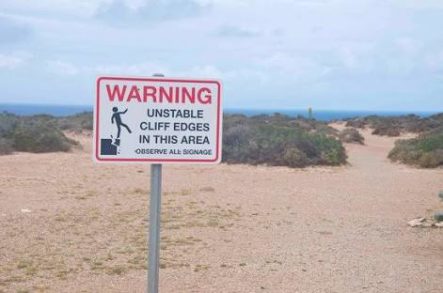
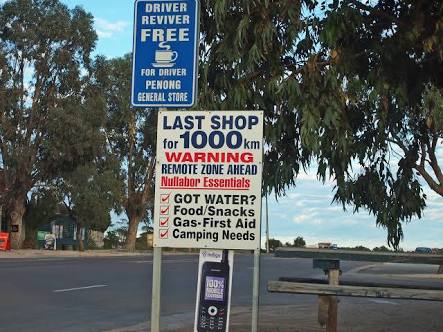
There are no sights to be seen. No roadside attractions to visit. No historical markers of any kind. The only points of interest are a few road signs like these.
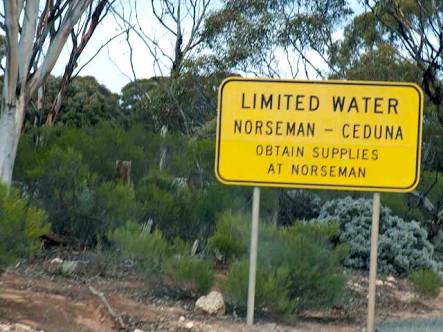
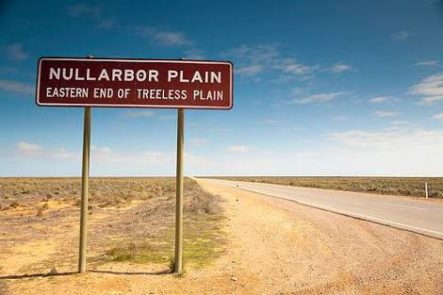
The word Nullabor is a bastardized version of the Latin words for “No Trees” (null arbor). And as you can see in the photos above, it may be a bastardization, but it’s not inaccurate.

I had hitchhiked across Australia on my first trip here after I graduated from college. In those days the 400 miles between Ceduna, South Australia and Eucla, Western Australia were unpaved. It often took days for hitchhikers to thumb a ride from one end of the godforsaken Nullabor Plains to the other, but when you finally did get a ride you knew it was going to take you all the way across, simply because there was nowhere for anyone to stop along the way. I ended up hitchhiking back and forth across the Nullabor four times.

The first time Jamie and I came to Australia, I wanted to drive across the Nullarbor again just to see how it had changed. I’d heard that the road had been paved and the images I’d conjured up in my head turned Cocklebiddy and all the rest of those horrid little spots into beautiful oases in the desert.

Jamie, always the good sport, said, “Sure, if you want to drive all the way across the country to Perth, let’s do it.”

To make a long story short, the pavement is the only thing that has changed along the Nullabor. Cocklebiddy, Mundrabilla and all the rest are still horrid little spots where you can stretch your legs, and get one of those rancid meat pies (in fact, I suspect that they may still be the very same meat pies) and a bottle of water. Oh, sure, some of the petrol stations are new and now offer ice cream bars and cartons of iced coffee and bags of chips, but they are not places any rational person would want to visit.

A motel or two can be found along the way, but I knew that my princess wife would find them wholly inadequate. My theory was that we needed to drive all the way to Norseman, the first real town on the west side of the Nullabor, if we expected to find a nice motel.

So I did a little research and found the nicest hotel in Norseman. But in retrospect, that’s a little like looking at yourself in the mirror and wondering, “Which of these warts is the prettiest?”

First of all, Norseman was even worse than I remembered it. At dinner, I asked our waiter how the town was doing economically.

“Not very well,” he responded mournfully. “The mine closed down and one third of the people moved away. So the company that owns the mine picked up their houses and moved them to another town.”

Seriously. They picked up one third of the town and moved it somewhere else. Even houses don’t want to live in Norseman.

We checked into our motel and took our bags to our room and the moment we opened the door, Jamie opened her mouth. She hated everything about the place — the bathroom, the bedroom, the bedspread, the carpet, the shower, even the material they used to build the structure.

I blame her extreme reaction on her dear departed stepfather, Dawson, who proudly encouraged her to settle for nothing less than the best, a rule she clearly violated when she married me. Jamie is a sweet, caring, kind woman who became the Frankenstein version of Eliza Doolittle. She learned to settle for nothing less than the finest meals, the finest hotels, the finest cars.

So it’s no wonder that she was horrified by our Norseman accommodations. On one hand, I can’t blame her because I wasn’t exactly delighted with them, and on the other hand I figured, It is what it is and we’re only going to be here overnight, so what the hell.

But Jamie wouldn’t let it go. The way she carried on, you would have thought that she had been sentenced to house arrest in this weary, dreary motel. She was eager to show Dawson the godawful conditions she was forced to endure for eight long hours, so she began taking photos. It sounded like we had been discovered by the paparazzi.

Click. Click. Click. Click. Click. Click. Click. Click. Click. Click. Click. Click. Click. Click. Click. Click. Click. Click. Click. Click. Click. Click. Click. Click. Click. Click. Click. Click. Click. Click. Click. Click. Click. Click. Click. Click. Click. Click. Click. Click. Click. Click. Click. Click. Click. Click. Click. Click. Click. Click.

Photos galore.

When we got home Jamie immediately took those rolls of film down to the corner drugstore to be developed. I was with her a few days later when she picked them up. With a bit of a mad glint of victory in her eye, she tore open the envelope and began flipping through the photos. This is what it sounded like:

Flip.

”Crap.”

Flip.

”Crap.”

Flip.

”Crap.”

And so on and so forth. You get the idea.

Why was she so upset? Because the photos were absolutely beautiful. Stunning. She couldn’t have created such gorgeous images if she had tried. Each of those Kodachrome works of art made our shabby stopover look look like the most beautiful hotel in the world. The lighting was perfect. She made the mistake of shooting her photos during the period of time cinematographers call “The Golden Hour,” that brief time in the blur between afternoon and evening when the soft, natural light can turn a blind man into Ansel Adams.

So in the end, Jamie was unable to show Dawson how I had mistreated her by making her stay in a dumpy motel in a dumpy town in the middle of the Australian outback.

But the good news is that the photos were so good that they encouraged her to take up a new hobby.

Photography.
Somewhere in Northern New Zealand: The dance of the sugar plum ferry

January 23, 2018 Jim 2 Comments

No, we are not in New Zealand. But Jamie’s a little under the weather this week and things are slow between Christmas and New Years, so I’m reliving a few tales of travel past that have never been told on JimandJamie.com:

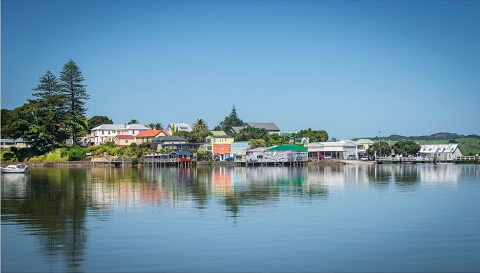
[Rowena, the pretty little town on the other side of Hokianga Harbour
Psychology professionals might observe my behavior and say I suffer from an obsessive compulsive disorder. I prefer the term delightfully eccentric.

Take ferries, for example. I will detour many miles out of my way just to ride on one. Nothing makes me happier than finding a ferry that can transport me and my car across a body of water, no matter how short the ride. When we lived in Southern California I veered off Pacific Coast Hiway several times a month just to ride the ferry 1000 feet from Balboa Island to the Balboa Peninsula.

If you’re unfamiliar with Balboa, you might assume that I was taking a shortcut that saved a considerable amount of time. In reality, just the opposite is true. It takes about five minutes to drive the long way from the island to the peninsula, but the ferry takes considerably longer, especially if there is a line or if you show up just as it departs from your side of the channel.

No, time had nothing to do with it. I just plain like the smell and feel and the romantic notion of ferries.

That’s why we’ve ridden them nearly everywhere we’ve traveled. Never once has Jamie complained about the time lost nor the gas wasted on my wayward waterway excursions.

Well, that’s not entirely accurate. There was that one time she complained. Rather vociferously, if my recall is anywhere near accurate.

Seat yourself in wayback machine’s shotgun seat and we’ll set the clock for 1997 and the longitudinal and latitudinal coordinates for the northern end of New Zealand’s north island:


It was late Spring and we had just visited Cape Reinga, the very northernmost tip of New Zealand’s north island, and were driving south toward Auckland. We passed through a small town named Kaitaia when I noticed that we were getting a little low on gas. “No problem,” I said to Jamie, “we’ll just fill up at the next town we come to.”

It was late in the day and unbeknownst to me, our gas gauge was already engaged in a mano a mano duel with the sun to see which one could sink below the horizon first.

Sunset came and went and our long day finally caught up with Jamie. She fell asleep.

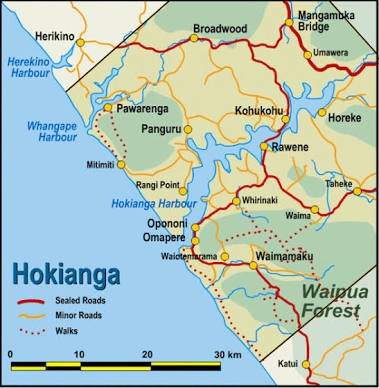
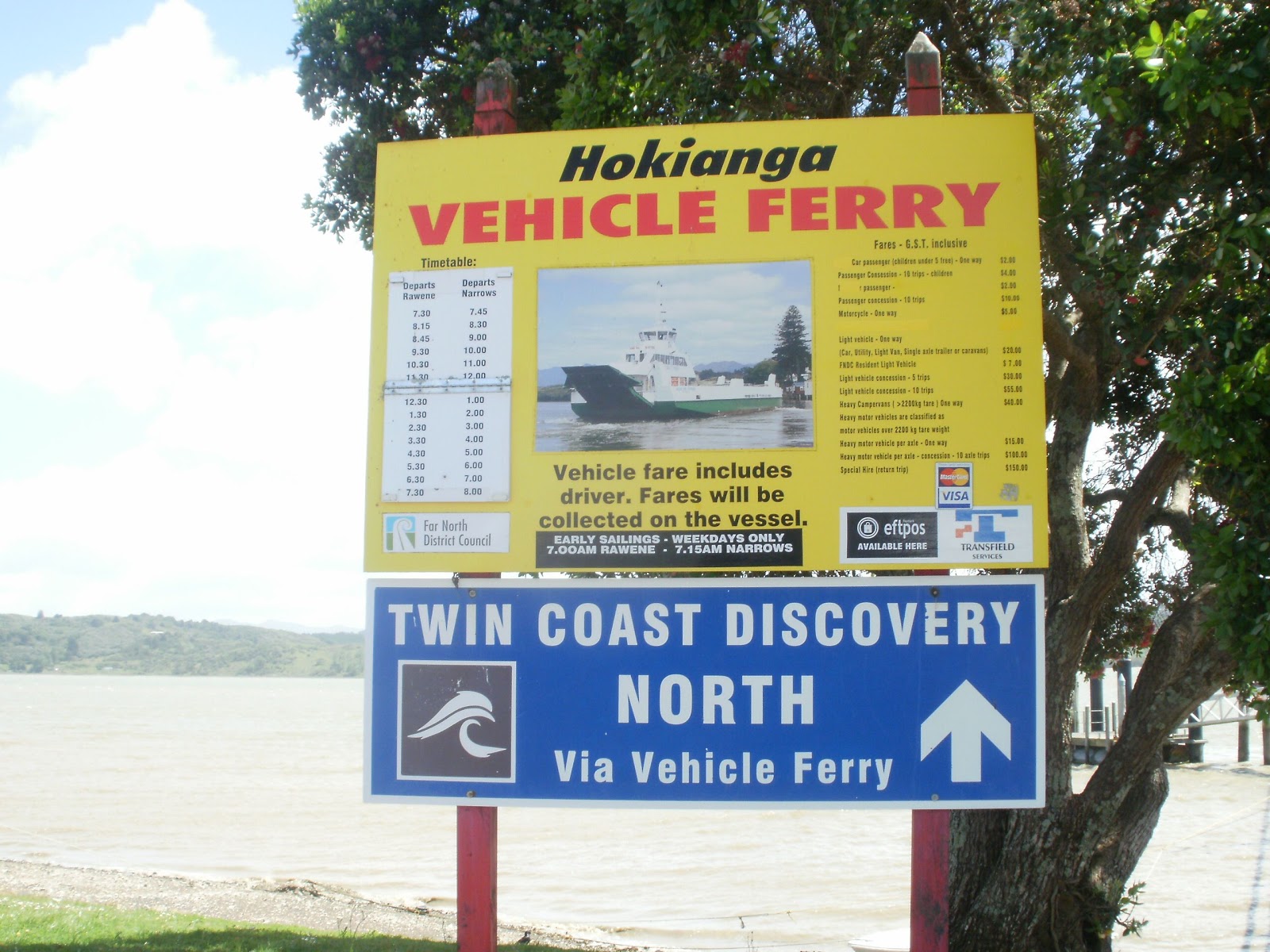
A few moments after she closed her eyes, I spotted a battered, wooden roadsign that said, “Hokianga Ferry” with an arrow that pointed off the main highway and onto a narrow country lane.

Well, I thought, there will surely be a gas station somewhere near the ferry. And I don’t know where Hokianga is, but it’s a ferry! I love ferries!

So I veered off the highway at about the same time that full darkness descended on northern New Zealand.

What kind of moron turns off the main highway onto an unlighted country road when it is dark and his gas tank is nearly empty. (Please note that the prior sentence was in the form of a rhetorical question.)

It was pitch black. No moon. No street lights. No towns. No villages. No farm lights. No neon sign up ahead indicating the presence of a gas station. No lights of any kind except the lonely headlights leading the way down the narrow country road in front of me.

By the time Jamie slowly roused from her nap, I was sweating. It was cold outside, but I was drenched in perspiration because the pointer on our gas gauge was rapidly dropping below the empty mark. I knew we were perilously low on petrol and I didn’t know where we were, but I knew I was unlikely to find any gas stations in this isolated area.

“Where are we?” Jamie yawned.

“We’re getting really close to a small town,” I assured her. “We’ll get a hotel room, spend the night and then we can take the ferry across the channel in the morning.”

“What hotel?” she asked. “What ferry?”

“Well, I’m not really sure,” I admitted, “but I’m sure we’ll come to a motel in the next few miles.”

“Hmmmmmmm,” is what she said, but “You don’t know where we are and we’re going to run out of gas out here in the middle of nowhere, you freakin’ moron” is what I heard.

And I must admit that what I heard was a pretty good analysis of our situation.

It was past 10 o’clock and were literally running on fumes when we pulled into a little town whose name I no longer remember. We stopped at the first motel sign we spotted, but the sign out front said “No Vacancies.” I went inside to ask where the next motel could be found.

“Your best bet is the hotel,” the owner said. “Just keep going down this road and turn right at the corner. You can’t miss it.”

Before I go any further I should explain to American readers that the word “hotel” has a very different meaning in Australia and New Zealand than it does in the United States. Americans think of a hotel as a multistory building housing dozens or even hundreds of rooms, with a lovely reception area, and a restaurant, maybe even a number of restaurants. Not so in the Antipodes. Down here a hotel is a pub that may have a couple rooms upstairs or out back. But some hotels may be all pub, no rooms.

This particular hotel appeared to be the latter. I walked into the jampacked pub, worked my way to the bar through the raucous customers, and asked the publican if any rooms were available. He gave me a what-the-hell-are-you-doing-here look, and gruffly, almost angrily, assured me that he had a very nice room upstairs and that we were very lucky to find it still available at this time of night.

“My girlfriend is out in the car,” I told him. “Where should we bring our bags?”

“Right here into the pub,” he growled. “I’ll take you up to your room.”

“How much is it?”

“Twenty-eight dollars.”

It’s an exaggeration to call this little community a town. Even describing it as a village would be an overstatement. There were just a small handful of darkened shops surrounding the pub and a scattering of lights hinting that a few farms or homes might be tucked away in the hills surrounding this isolated bit of civilization. I tell you this so that you realize that every male resident within twenty miles must have been in the pub that night. And they had been there for a while, if you know what I mean. And in case you don’t know what I mean, I mean that they were all drunk or well on their way to achieving that condition.

I went back and fetched Jamie, incredibly relieved that we had made it this far without running out of gas, but incredibly concerned about what my irrational love of ferries had gotten us into. I was also careful not to mention that the room I had rented cost a mere $28. No reason to bother the woman with unimportant details, I decided. We grabbed our suitcases and headed into the pub.

Have you ever been to Disneyland’s Haunted Mansion? If so, you’ve undoubtedly seen the eerie statue whose eyes follow you wherever you go. That’s exactly what it felt like as we entered the pub and every inebriated head in the house turned and watched our every move as we wheeled our suitcases through the crowded pub.

Well, it can’t get any worse than this, I thought. But the falsity of that assumption became apparent as soon as the bartender opened the door of our room. The room was barely big enough to hold one small bed and our two suitcases. A bare lightbulb hung from an electrical cable that dangled haphazardly out of the ceiling. Our bathroom, just as small and dirty as we had feared, was across the hall and it was to be shared by all the hotel’s guests. (By the grace of God, we were the hotel’s only guests that night, so that was not an issue.)

We quickly washed up, brushed our teeth, and climbed into the small, rickety bed. It sagged so badly that Jamie and I immediately rolled inward and smacked into each other mid-mattress. Even she had to laugh at our predicament.

We slept a restless, fitful sleep and woke up in the morning wondering how the next chapter of this story would unfold.

Just then the publican gently knocked on our door and politely asked us what time we would like breakfast.

Seriously? Breakfast? We were to get lodging and breakfast for our twenty-eight New Zealand dollars? We couldn’t wait to see what kind of horrible meal awaited us downstairs.

We carefully picked our way down the squeaking stairs and found the publican cooking breakfast. He invited us to sit down at the kitchen table and to have some fresh baked bread and farmfresh butter with our tea and coffee while he finished preparing our morning meal.

The publican delivered our plates, heaped high with what’s known in this neck of the woods as a “big brekky,” and sat down with us. Turns out he was new to the publican business. He had been a government official in Auckland for thirty years until he retired, bought the pub, and moved north with his wife.

He apologized, saying that he feared his demeanor may have sounded a bit gruff the night before, and explained that he had been having a difficult evening dealing with unruly drunks and that renting a room was the last thing on his mind. The publican and his wife could not have been nicer, warmer, more welcoming people. And the breakfast he prepared was delicious.

While we finished off our big brekkies, the publican brought our bags downstairs. Then we took photos, told them what a wonderful, interesting experience it had been, and climbed into our car.

“Oh, just one more question,” I said before putting the car in gear. “Where’s the nearest petrol station?”

“No petrol stations here,” the publican said. “But you’ll find one on the other side of the harbor as soon as you get off the ferry.”


Of course, that was dependent on our tank still containing enough droplets of gasoline to get to the ferry and then getting to the gas station on the other side. If sweat were gasoline, I could have filled the tank.

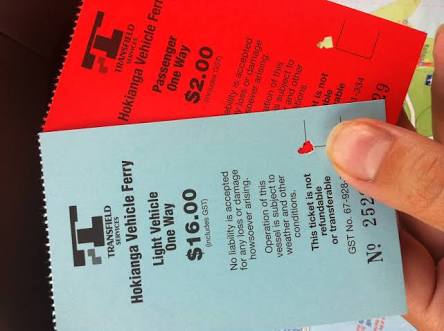
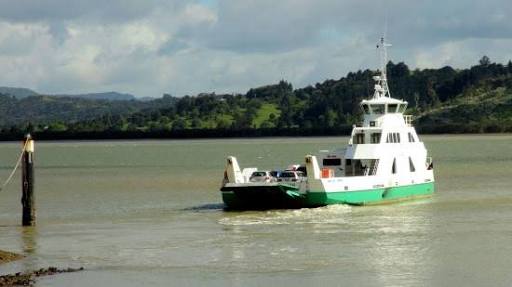
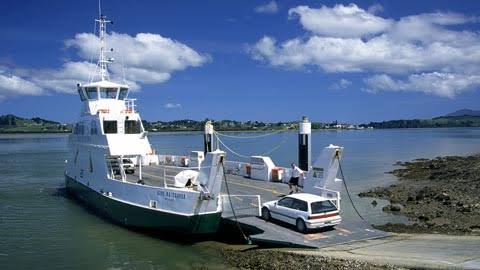
Luckily, we made it to the ferry, rode it across the Hokianga Harbour, drove up the ramp on the other side, and rolled into the petrol station just as our car digested the last of our fuel. Feeling an incredible sense of relief, I filled the tank, paid the attendant, and climbed behind the wheel again.

“There,” I said looking at Jamie. “That was fun, wasn’t it?”

“You,” she replied, “ain’t right in the head.”

Maybe so. But as I said earlier, I prefer the term delightfully eccentric.

Murray Bridge, South Australia: “Gimme a little kiss.”

December 26, 2017 Jim 2 Comments


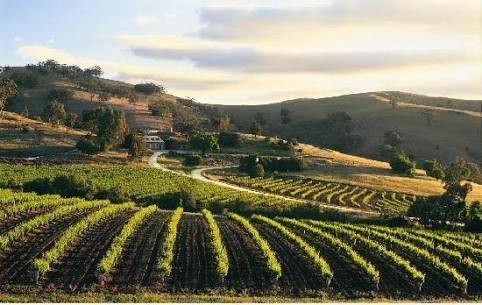
As I mentioned earlier, John and Margaret recently took us on a tour of the outback country outside Angaston. We passed through idyllic little communities like Eden Valley and Mount Pleasant, and considerably less idyllic towns like Taunton, Tungkillo, Palmer and Sedan, before stopping for lunch alongside the Murray River in a lovely little town named Mannum.

Wondering how far our previous travels had taken us, John asked, “Have you ever been to Murray Bridge?”

“Yes,” Jamie snapped. “And we hated it.”

“I agree,” John responded. “It’s a nasty little town.”

Her head quickly turned in my direction and she gave me a triumphant smirk, as if John’s opinion of Murray Bridge served as some sort of chastisement that I richly deserved.

Those of you who know Jamie are probably thinking that her negative opinion of Murray Bridge seems out of character, because she’s nearly always as pleasant as, well, Mount Pleasant.

What caused her uncharacteristic reaction? Despite her sweet demeanor, the woman can hold onto a grudge like a bulldog holds onto a bone.

Murray Bridge is a dreary town lying right on the edge of the outback. It meanders half-heartedly along the twisted banks of the Murray River, Australia’s longest waterway.

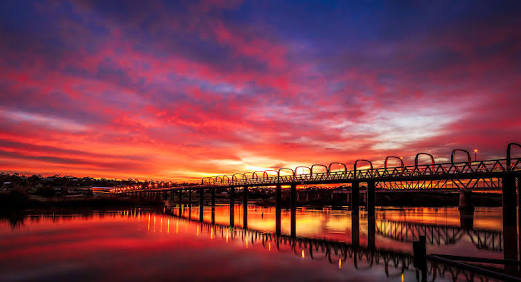
Now I’m sure you could find some people who would describe Murray Bridge as picturesque, and the photo at the top of this blog item might make you believe that it is so, but Jamie’s description would be far less charitable. As far as she’s concerned, it’s the second worst town in all of Australia. (Nimbin, New South Wales, is her choice for the worst town, but that’s a story for another time.)

Many years ago we made a long, roundabout drive from Melbourne to Adelaide in the middle of summer. The day was hot. Very hot. As they say in Australia, it was a scorchah! It was dry and dusty and it seemed as if the day and the drive would never end.

As the sun began creeping lower on the horizon, I suggested that there were still too many miles between us and Adelaide, and that we should probably begin looking for a motel. Jamie agreed.

Unfortunately, the Australian outback is not known for its wide selection of fine hotels and motels. Some of the tiny outback communities we passed through had none, while others had cheap, rough-and-tumble motels that didn’t meet Jamie’s exacting standards.

It was nearly midnight when we finally pulled into Murray Bridge, a real town with a population of twenty thousand or so and with everything that entailed — petrol stations, street lights, a McDonald’s, and best of all, a motel.


I said “a motel,” and the truth is that it may have offered dozens of excellent accommodations, but we didn’t bother to look beyond the first one we got to. It was very late. We’d been driving all day. We were exhausted. Any motel, we thought, would do.

So we pulled off the highway and onto the Murray Bridge River Inn’s crunchy gravel driveway. I parked our rental car in front of a flickering, exposed lightbulb, told Jamie that I’d be back in a couple minutes, and walked into the motel’s office.

A bell rang as I pushed the door open, but no one was on duty at the counter when I walked in.

So I waited.

And waited.

And waited.

I know that a lot of motel owners have living quarters just off their lobbies, and I could hear the sound of a television playing through an open door at the rear of the lobby, so I let out a quiet, “Hello. Anybody home?” but got no response. A few seconds later I began ringing the little bell on the counter.

Still no one responded.

I rang the bell a bit more vigorously. And then a lot more vigorously.

Eventually I heard the sound of someone stirring in the back room, followed by the sound of slippers slowly shuffling across the floor toward the lobby.

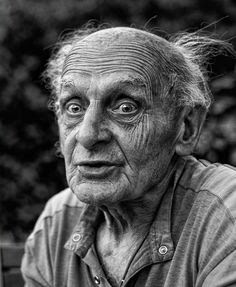
Finally, a pair of bony, liver-spotted hands separated the strands of multi-colored stringed beads hanging in the doorway and a scruffy, nearly toothless old man appeared. His thinning, white hair was disheveled and so were his clothes. My determined ringing had clearly awakened him from a deep sleep.

Through bleary eyes, he looked at me as if he had no idea why I was there. So I finally said, “Do you have any rooms available?”

Shaking the cobwebs out of his head, he slurred the words, “Rooms? Sure. I think I got some rooms.”

He was drunk, barely able to stand, barely able to talk.

This is perfect, I thought, shaking my head in disgust as I filled out the registration form. Just perfect.

“Ish it jus’ you?” he asked.

“No. There are two of us. My wife is out in the car.”

“I bet sheesh beautiful.”

“Well, yes, she is,” I replied.

“Do you tell her you love her?” he asked mournfully as if he had a back story that needed to be told.

“Every day.”

“I don’t believe it. Nobody tellsh their wife they love ‘em every day.”

“I’ll prove it to you,” I said.

And with that I stepped outside into the flickering light and motioned for Jamie to get out of the car and to come into the lobby.

She was tired. She was cranky. She was in no mood for what was about to happen.

As Jamie trudged across the gravel parking lot, the old drunk came out from behind the counter and was standing by the door when she opened it. She quickly sized up the situation and did not like what she saw.

“How often do I tell you I love you?” I asked.

“I don’t know,” she said through gritted teeth. “At least once a day.”

The old drunk, reeking of alcohol and cigarettes, was blown away. As much by her beauty as by her answer.

He staggered toward her and she said later that it was like everything had gone into slow motion. She knew he was moving toward her, but she was frozen into inaction.

He reached out and put a bony hand on each side of her face.

“She’sh beautiful,” he said. “Gimme a little kiss.”

And with that, the stinky, toothless drunk puckered up and planted a big, wet, smacking kiss right on her lips. (There is some disagreement on this particular detail. I say he kissed her on the lips, but Jamie insists that she was able to turn her head at the last second so that the kiss landed on her cheek. Mere details.)

I saw the look on her face and thought I was going to die laughing. But I also realized it was time for me to step up and get our room rented before Jamie tore the old drunk’s face off.

We finished registering, and in answer to my original question, the inebriated innkeeper did indeed have a room for us. In fact, he had a wide variety of rooms available for us because we were the Murray Bridge River Inn’s only registered guests.

I hustled Jamie back out to the car, drove a couple dozen yards to Room 4, parked, and carried our bags into the room. Jamie was pissed at me, but I figured she’d be fine after a few hours sleep.

Unfortunately, the room did not meet Jamie’s standards and she was quick to let me know it. It was constructed of cinder blocks, which is one of her pet peeves. The bathroom was about the size of a telephone booth. There were more mosquitos inside the room than there were outside. And to top it all off, the room had an odor that was both unrecognizable and unpleasant.

Nevertheless, we brushed our teeth and climbed into bed. A few minutes later, some other guests checked in. Although the motel was empty except for us, the old drunk put them into the room right next to ours. That would have been bad enough, but these were not just any guests. No, they were greasy, long-haired, tattooed, Harley-Davidson riding Hell’s Angels who sat outside Room 5, the one immediately adjacent to ours, revving their big, throaty bikes.

The good news is that they eventually stopped revving their motorcycles and went into their room. The bad news is that the sounds of their partying was even louder than the sounds of their motorcycles.

We wanted to sleep. They didn’t.
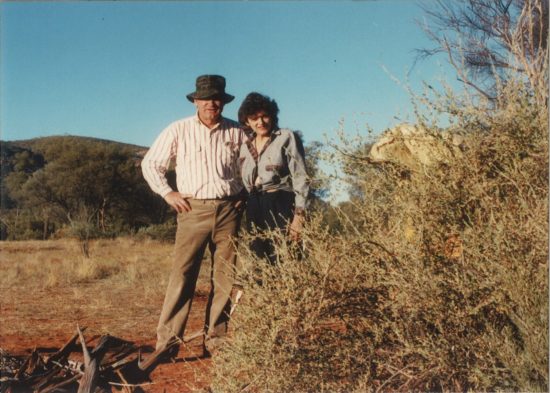
By the time morning finally rolled around, Jamie was more pissed than ever.

For the last twenty years, she’s continued to complain about the night she had to spend in Murray Bridge, about how awful it was to be kissed by that stinky, drunken, toothless old man, and how she’d never forget the sound of partying Hell’s Angels.

Why have I bothered going back in time some twenty years to dredge up this story? Simple. I was killing time on my iPad today and just happened to look up “Murray Bridge River Inn” on TripAdvisor.com.

In light of the story above, the most recent reviews of the River Inn are gut busters. For example:

Disappointed. I went to check in and was greeted by a grumpy old man. Then walked into our room. Most out dated room I’ve been in … There was no way we could stay there for the two nights we had booked. We just drove off.

Tired old building, middle of nowhere. Just a tad disappointed, especially after seeing others rate the Inn with 4’s?! Theres no view, pool, no covered/secure parking, and small rooms have dated old furniture and decor. Located near a train line (honking horns) and by the smell downwind of a Piggery or dairy…. something was ripe this morning anyway. A cheap bed if you’re tired and can’t go any further.

Not many other options in town. A fair way out from the main town centre. This hotel has passed it’s prime.

Sadly, this place has been the only dissapointment on our entire trip to Murray Bridge.

From the moment we arrived the service at the front desk was terrible. Everything was too much of a problem to help us, even though our requests were to pick up the keys early, drop off laundry, ask for extra towels and get some milk. The service is unprofessional, un-inviting and simply unacceptable.

We were there for a sporting event which meant we spent limited time at the motel and the staff walked passed us halfway through our stay and as we were about to head off for another days competition. And then only minutes later they rang us via mobile to advise they wanted payment for the entire weekend, even though we had booked and provided credit card details and still had 3 nights left on our booking and made us feel as if we were skipping the bill.

Hilarious. It’s almost as if time stood still and that we wrote the most recent reviews of the Murray Bridge River Inn twenty years ago when we stayed there.

It should be noted, however, that the motel has changed hands several times in the intervening years, and that the current owner wants everyone to know that he has only been its proprietor for the last four years or so.

Four years? According to Jamie, that’s about how long it took the drunken old desk clerk to touch her cheeks and move in for that kiss.

Time flies when you’re having fun, huh?

Adelaide, South Australia: Christmas Day 2017

December 26, 2017 Jim 5 Comments

What, you may wonder, do a couple Americans do on Christmas Day when they’re half way around the world from home?

We are lucky enough to have lots of friends here in the Barossa Valley and several of them invited us over to their homes. We flipped a coin and ended up spending the day in Adelaide at the beautiful home of Andrew and Toni Rutter. He’s the son of our neighbors John and Margaret Rutter.

What an interesting, friendly bunch of people. Over achievers, one and all.

Of course, you already know about John and Margaret, the doctors who live up the street from us.

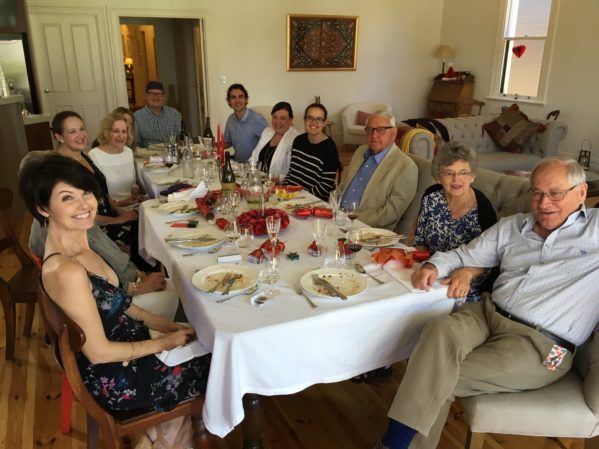
Sitting around the Christmas dinner table in Adelaide. Starting clockwise from the lower left: Jamie, Wendy (hidden behind Jamie), Toni, Lisbeth, Megan (hidden behind Lisbeth), Andrew, Angus, Debbie, Ellie, David, Dr Margaret, Dr John. 

A few other’s who were there:

John’s brother, David, spent a career as an Aussie diplomat posted in places like Singapore, Sri Lanka, France, and finally, San Francisco, where he was the Consul General.

Andrew, John and Margaret’s son and our host, runs IBM finance in Australia, New Zealand and South Africa. He shares his father’s dry sense of humor and even his facial expressions.

Toni, Andrew’s wife, is a former IBMer who later went into event planning. She’s a joy to be with and, as you would expect from an event planner, pulled off Christmas dinner without a hitch.

Angus, Andrew and Toni’s son, just finished medical school and has taken a year off to do research. His subject? Dwarf hermaphroditism. He’s a pretty funny guy and with a straight face said, “I’m the world’s leading expert.” Then he pointed out that it’s relatively easy to be the world’s leading expert in a condition that has only afflicted about 70 people in recorded history.

Ellie, Andrew and Toni’s daughter, will graduate from Macquarie University in June and is going to be a school teacher. She’s a great kid, but do not be fooled. John assures me that this attractive young woman is a card shark who will take your every last penny should you be foolish enough to sit in on a poker game in which she is a participant.

I sat next to David’s wife Wendy, who told me, “You can play with my yo-yo any time you want.” No, I won’t explain what that meant and you can read into it anything you wish.

John and David’s sister Lisbeth sat to my left. She admitted that she can’t tell a joke and then proved it by telling this joke: “Why was the Egyptian confused? Because his father was a dummy…(long pause and complete silence from everyone around the table)…I mean a mummy. His father was a mummy.” Apparently Lisbeth really can tell a joke because she got the biggest laugh of the day.

I don’t mean to shortchange David’s daughters Debbie and Megan, but I didn’t get to spend much time with them. But I can tell you that Debbie is following in her father’s footsteps and is about to begin a new stint in Australia’s Beijing embassy. And sister Megan works in finance and came in all the way from Queensland’s Gold Coast. (I think she won the award for having travelled the farthest.)

Christmas dinner was delicious and entire Rutter clan warm, welcoming, and wonderful and made us feel like part of the family.

We miss our friends and family back in the United States, but we had a great Christmas nonetheless.

Angaston, South Australia: “Traveling makes one modest — you see what a tiny place you occupy in the world.”

December 26, 2017 Jim 2 Comments


“Traveling makes one modest — you see what a tiny place you occupy in the world.”

That’s a quote from French novelist Gaustave Flaubert, who knew of what he spoke after visiting most of Egypt and most of Egypt’s prostitutes.

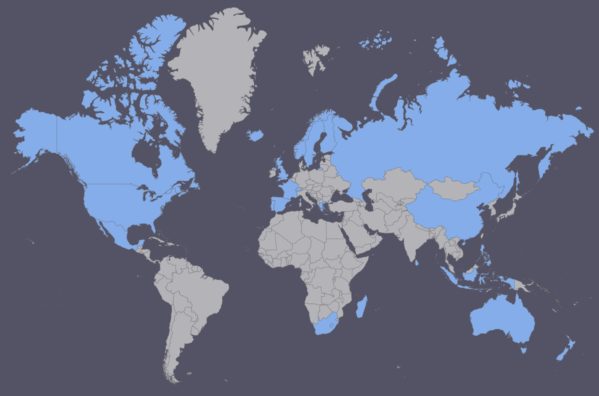
Jamie and I tried to add up all the countries we’ve visited. We tallied up Australia, Canada, China, England, Fiji, Finland, France, Greece, Hong Kong, Iceland, Indonesia, Madagascar, Macau, Mauritius, Mexico, New Zealand, Norway, the Philippines, Portugal, Russia, Singapore, South Africa, Spain, Sri Lanka, Sweden, Samoa, Switzerland, Turks & Caicos, and Wales. Then, of course, we probably need to include a few miscellaneous places such as French Polynesia in the Pacific and Madeira in the Atlantic. We both think this list is missing a name or two, but we can’t at the moment figure out what they might be.

You look at this map and realize just how correct Flaubert was. We’ve made three trips around the world and the map above still shows a lot more gray (the places we have not yet visited) than blue (the places we have visited).

But feeling small has a lot less to do with geography than with psychology. When you leave your home, your comfort zone, and see how and where other people live and the immensity of not just the globe, but of life, you shrink as your perspective widens. When you find yourself in a country of a hundred million people and yet none of the seem to speak your language, it makes you realize how insignificant you really are. When you’re able to stand in the exact spots that giants like Napoleon or Churchill or Darwin or Captain Cook stood, and think about how much they accomplished and how little you’ve accomplished, you realize how wee you really are.

Our current trip will stretch on for two more months, but we’re already talking about our next trip. On one hand, Jamie says she’d like to skip everything else and just come back to Australia. On the other hand, she’d like to visit godson Jack in London next year, stop over in St Helena, a small island in the South Atlantic, on the way to South Africa, then fly on to the Land Down Under.

But we’d also love to sun ourselves on a deserted beach in Costa Rica, sail through the Panama Canal, see Angel Falls and the Catatumbo Lightning in Venezuela, explore Chile from top to bottom, head into the Pacific to see Easter Island, and to spend a few days in Ushuaia, Argentina, the world’s southernmost city.

But here’s the thing:

We can check countries and cities and natural wonders off our bucket lists, and we can accumulate buckets of frequent flier points, but neither of those things makes us any more significant.

But they do get us some very nice hotel rooms in places where you really don’t want anything less than a very nice hotel room.

Sedan, South Australia: The doctor is in

December 26, 2017 Jim 2 Comments


I wrote about our friend, Dr. John Rutter, in an earlier post. But you really need to know more about him, because he’s led an incredibly interesting life and practiced medicine in an era that no longer exists.

In addition to seeing patients in his Angaston office, John periodically tended to those who needed his services in smaller outlying towns. Calling them towns may be a bit of an exaggeration, because some of them were mere crossroads with a pub and a home or two.

No matter. John went where he was needed.

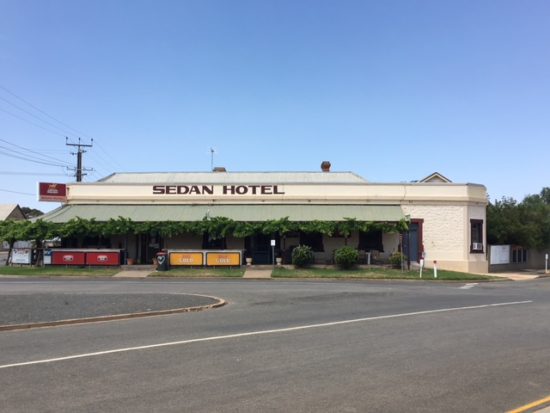
For example, once a month he traveled to Sedan, one of those crossroad communities. Today Angaston and Sedan are separated by a lovely country road. But back in the early days of John’s practice, getting from one to the other was an ordeal — 18 miles down a dirt road filled with deep, washboard ruts and even deeper potholes. Although the temperatures often soared to 100 degrees and higher, the cars in that era had no air conditioning, so John’s windows had to be rolled down even when the air was filled with thick clouds of sticky red dust that ran to the horizon and beyond.

By this time, you may wonder what the photo at the top of this story has to do with John’s trek to Sedan. Well, believe it or not, there was no medical office in the area, so John saw patients in the hotel dining room.

We were driving around with John and Margaret one day when we stopped at the grocery store in Sedan. He pointed across the street to the the hotel.

“The worst,” he said, “was when I had to perform a sigmoidoscopy on the dining room table.”

(If you are unfamiliar with the procedure, just click on the word to get its horrifying definition.)

“And then,” he finished, “they served lunch on the same table.”

Medical duties completed, John drove back to Angaston on the same dusty, rutted road. But on the way, he had to keep an eye out for handkerchiefs hanging on farm fence posts. When he saw a white one, it indicated that the residents needed his services. When he saw a red one, it meant the need was critical.

There were many times that he accepted a live chicken or goose in exchange for his services.

What an interesting career. What an interesting life. What an interesting man.

UPDATE: I mentioned a sigmoidoscopy in the story above. In case you are unfamiliar with this barbaric medical procedure, allow yourself the pleasure of hearing it described by comedian Dennis Wolfberg. I remember hearing this routine on the radio sometime in the late 70s and laughing so hard that I had to pull off the freeway until it was over. Dennis was one of my favorite standup comics in the 70s and 80s and left us far too soon.

Angaston, South Australia: Gasp! Jim makes a mistake!

December 26, 2017 Jim Leave a Comment

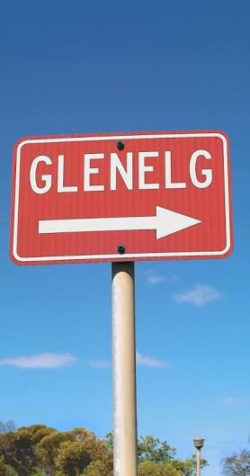
In our post about Adelaide, I said Glenelg was the only town I knew of whose name is a palindrome, meaning that it reads the same forward and backward.

Glenelg reads the same forward as
backward. Shouldn’t the sign have
arrows going in both directions?

Well, to paraphrase my lovely wife, “There you go again, spouting off about something you know nothing about.”

Turns out there are dozens of palindromic town names around the world, including other towns named Glenelg in Maryland and in Scotland.

There are even a few towns whose names are double palindromes. Such as Nerren Nerren and Mullum Mullum here in Australia.

In United States we have complex palindromically-named towns such as Ekalaka Lake, Montana and Wassamassaw, South Carolina, and then there are starkly simple towns named Ada in Minnesota, Ohio, Oklahoma, and Oregon.

You can see the complete list of all the world’s palindromic town names at this Wikipedia list.

I don’t know why, but I’ve always loved palindromes. For many years, I proudly resided in palindromic zip code 92629.

Connoisseurs of palindromes would agree that the best ones express complete, even pithy thoughts. For example, my favorite is:

“A man, a plan, a canal — Panama.”

Writer Leigh Mercer came up with that one in honor of John Frank Stevens, the civil engineer hired by Teddy Roosevelt to lead the construction of the canal after France abandoned its efforts.

Napoleon is credited with another great palindrome. After he was exiled to Elba, a small island in the Mediterranean, he supposedly said, “Able was I ere I saw Elba.”

And Mark Twain claimed that the first words ever spoken were directed at Eve: “Madam, I’m Adam.”

Then there are poor palindromes that cobble together a bunch of unrelated words into a sentences that read the same forward and backward, but lack any meaning, wit, and substance. For example, a computer created one that reads:

“A man, a plan, a canoe, pasta, heros, rajahs, a coloratura, maps, snipe, percale, macaroni, a gag, a banana bag, a tan, a tag, a banana bag again (or a camel), a crepe, pins, Spam, a rut, a Rolo, cash, a jar, sore hats, a peon, a canal – Panama.”

See what I mean? Lots of words, little substance.

But let’s get back to Glenelg. It’s an ugly word, isn’t it? It sounds like someone swallowing. But trust me on this — the beauty of the place quickly makes you forget the ugliness of its name.

Maybe they should rename it Ekalaka Lake.

Angaston, South Australia: Three love stories

December 19, 2017 Jim 5 Comments

Our friends John and Margaret Rutter have lived in the same beautiful old home, two doors up on the other side of French Street, for more than fifty years. They met in medical school and will celebrate their 60th wedding anniversary in just a few weeks.

Margaret was a country doctor who worked for the state of South Australia, traveling from one isolated country town to another to care for children who wouldn’t otherwise have had any medical care. John was the village doctor here in Angaston for fifty years. He knew everyone — poor and rich and incredibly rich and literally knows where all the bodies are buried.

On one hand, he has a wonderful, dry, understated sense of humor. For example, on a drive past the local cemetery, he gave a little nod toward the headstones and said, “Most of those people were my patients.”

On the other hand, he is a born poet. He allowed us to read his “narrative” (most people would call a it a book, but he insists on the much plainer terminology) which is filled with fascinating stories about his deep, enduring love for three things — the village he lives in, the outback he lives near, and the woman he lives with.

I found this lovely description of Angaston, his home for more than fifty years, on page 117 of his narrative:

I mused with pleasure on my home. A sleepy town, nestling in green covered hills, where we searched for mushrooms in the autumn, and fished for perch in the streams during winter.

Where we walked over the hills all year round, revelling in the cold and wind of winter and the sun and heat of summer, where the flowers of spring and the rich colours of autumn stood firm against the frenetic assault of the media, the ever increasing restrictions of governments and the heartless rigidity of the bureaucracy.

Where the inhabitants floated happily along on a sea of wine allowing enough to be absorbed to make their hearts strong and to bring a healthy glow to their complexions.

I had observed that the longest lived of the inhabitants had two things in common – they loved their gardens and they loved their wine. They talked long and earnestly about their wine and just as long and earnestly about their carrots and beans and lettuces and roses and sweat peas.

They claimed that red wine was the best drink and pigeon manure the best fertilizer.

They loved their music and they loved their sport – but above all they loved their churches and on the Sabbath the bells were rung loud and clear – proclaiming their faith to the world.

And out of all these things emerged a natural generosity of body and spirit that welded the community together, and therefore it flourished in the unique way of so many Australian country towns.

While we’re at it, let’s include his description of his lifelong love affair with the Outback:

To the north and south ran our sand hill, to the east were endless lines of parallel sandhills, and to the west was a blurred nothingness, on which the only recognisable feature was our vehicle, looking tiny and vulnerable, and beside it our fire, a minute speck of flame from which a cotton thin thread of smoke went straight up to disappear in the heavens, undisturbed by even the faintest touch of a breeze.

The panorama, to all points of the compass, was huge, stark, somber, deadly, and yet magnificent.

I felt small, but secure, surrounded by nature in all her rawness — bare, unclothed, uncluttered.

For a brief moment I experienced a flash of understanding of how the aboriginals felt about their land.

For them it was all things, all powerful, omnipotent, permanent, mysterious. It giveth and it taketh away, and they are a part of it.

I could feel the strength of the land around me, its power and its incorruptibility.

When changed by man it slowly and remorselessly rids itself of him and then just as remorsefully returns to its natural state.

I looked at our footprints on the sand. Soon the air would move and they would be gone forever and there would be no trace of our passing…

I walked steadily for a couple of kilometers and then sat down amongst the gibbers and took in the scene around me.

The plain seemed almost endless, and was scattered with millions of small brown gibbers, all showing the effects of the intense heat they had been subjected to over tens of thousands of years.

The land was motionless, there was no sound, the air was still. There was no sign of life — not a bird nor a blade of grass, just countless shimmering stones.

The pale blue sky was devoid of cloud and covered the land from horizon to horizon like an immense blue umbrella. As I watched the sky it seemed to come closer and closer until I felt that I could put up my hand and touch it.

Once again I felt the prodigious power of the land. Its strength seemed to ooze into me, giving me a feeling of contentment and calm.


And then, of course, John devoted a few words to Margaret, the woman he’s so devoted to:

I had met her in a zoology lecture during the first year of our medical course and had been immediately smitten and we had married soon after our final exams. I had become progressively more smitten as the years rolled by. She was christened Margaret but most of our friends called her Agatha. I was never sure why.

“What are you thinking about?” she said.

“I’m wondering why we are sitting up here at three in the morning drinking a stimulant.”

“Do you feel stimulated?”

“Yes, how about you.”

“Me, too,” she replied, taking me by the arm and leading me back to the bedroom.”

Oh, for God’s sake, John. You had me hooked on your sweet, tender love story and then you went all soft core porn on me.

Despite this unexpected detour off the main road of his narrative, Jamie and I are truly honored that John allowed us to read his reminiscences.

And we’re even more honored to call John and Margaret friends.

Adelaide, South Australia: The best city in the Southern Hemisphere?

December 19, 2017 Jim 2 Comments

I’m about to reveal a prejudice that resides deep within my being. I’m not proud of this, but rest assured that I am man enough to confess my own shortcomings.

Ready? Here goes.

I do not like big cities. No, that is not a strong enough statement. I hate big cities. I loathe big cities. I detest big cities.

That’s one of the reasons I love Adelaide.

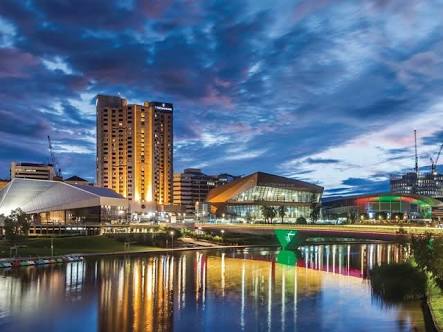
A nighttime view of Adelaide’s hotel and entertainment district across the River Torrens

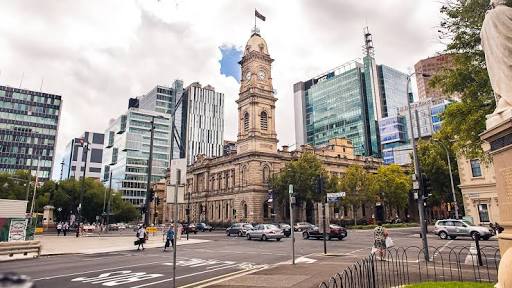
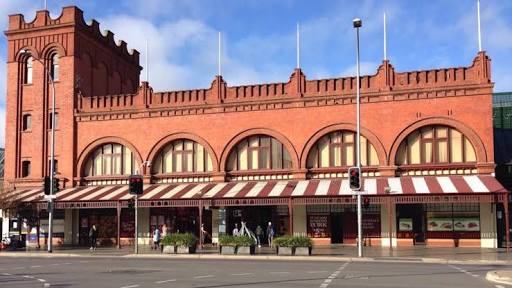
The city has done a wonderful job maintaining and restoring many of its beautiful old buildings.
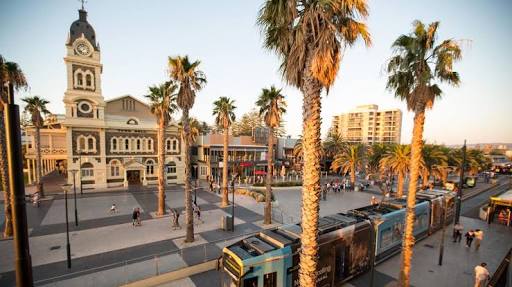
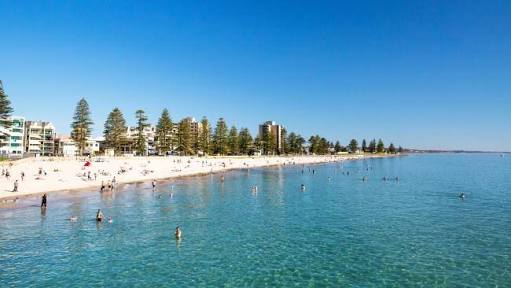
The beach at Glenelg. So few people and so many miles of beaches mean it’s difficult to find a crowded one (In a totally unrelated side note, Glenelg is the only town I’m aware of whose name is a palindrome, meaning it reads the same forward as it does backward.)
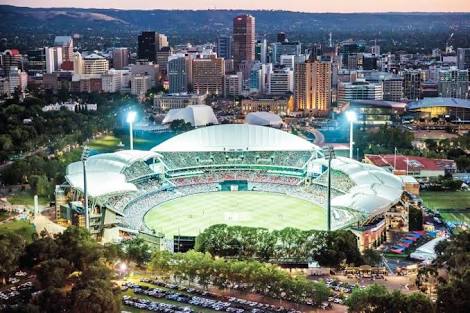
Downtown Adelaide with sparkling new Adelaide Oval in the foreground and the Adelaide Hills in the background.

The Adelaide Central Market features hundreds of vendors selling everything gastronomic. Jamie loves wandering its aisles.
The entrance to the Rundle Mall at King William Street

South Australia is nearly twice as big as Texas, but its population isn’t even one tenth of the Lone Star state’s. All of South Australia has only 1,700,000 people. And the population of Adelaide, its capital, combined with all its suburbs is a mere 1,300,000.

That makes Adelaide incredibly livable. It has good roads and handy mass transit. It is surrounded by huge parks, bisected by the beautiful River Torrens and bordered by miles and miles and miles of uncrowded beaches. On one hand, it does a remarkable job of restoring and maintaining its heritage buildings, and on the other hand, it encourages sleek new buildings. The city’s rush hour lasts about fifteen minutes. And, as if all that weren’t enough, it has the same kind of temperate Mediterranean climate that has drawn tens of millions of people to (and ruined) Southern California.

What’s not to love?

Let’s quickly dispense with any pretenders who might attempt to claim that they are the best city in the Southern Hemisphere.

Sydney? Surely beautiful, hugging the many bays and inlets that make up its famous harbor, but it’s really just another big city with horrible traffic and stupendously expensive real estate.

Melbourne? I’ve never understood those who insist that Melbourne is a beautiful city. It’s just Sydney without the harbor.

Auckland? Perhaps the only other city on this list that could give Adelaide a run for its money. I think of it as a mini-Sydney.

Wellington, New Zealand? Windy and cold all year long. In the words of my illustrious farmer father, “Colder than a well digger’s lunchbox.” Think of it as San Francisco minus the charm. And since it is New Zealand’s capital city, it’s filled with babbling nabobs and bungling bureaucrats.

Cape Town? The setting is stunning and parts of the city are definitely beautiful, but it’s also wracked with gut-wrenching poverty and an unimaginable chasm between the haves and the have nots. Need more? Every travel book and website warns visitors about the the city’s horrendous crime.

Santiago, Chile? An incredible setting  right at the foot of the towering Andes, but something’s missing and I just don’t know what it is. It never shows up on those lists of “most beautiful cities.” In the end, it is home to more than 6,000,000 people and that makes it just another big city plopped down in front of some spectacular mountains.

São Paulo? Rio de Janeiro? Buenos Aires? Poverty. Poverty. Poverty. Poverty that overwhelms the remarkable beauty of all three cities.

So there you have it.

The competition has been vanquished.

Adelaide, South Australia, I hereby proclaim you “The Best City in the Southern Hemisphere.”

Angaston, South Australia: The world’s longest flight

December 19, 2017 Jim Leave a Comment


When we made our quick trip back to Dallas, we flew from Sydney on Qantas Flight 7 and back on Qantas Flight 8. Until recently, they were the world’s longest regularly scheduled non-stop commercial flights.

How long? 8,577 miles over the course of fifteen and a half hours. That’s more than one third of the way around the world.

From 2013 to 2017, no other flights were longer. But the distance championship has changed hands a couple times since February 2017. And it’s about to change hands again.

Travel & Leisure has the stats:

Passengers traveling from Doha to Auckland, New Zealand, on Qatar Airways’ inaugural flight between the two destinations are in for a long ride this Sunday. In fact, at 16 hours 20 minutes, the flight clocks in as the longest air route in the world.

Crossing 10 time zones, the flight departs Sunday morning at 5:10 a.m. and skims over Dubai, the Indian Ocean, and western Australia before finally touching down in Auckland on Monday morning, at 7:30 a.m.

The flight is a one-up on Emirates, which started a 8,902-mile service between Dubai and Auckland just a few months ago. The Doha service, meanwhile, comes to 9,032 miles.

But Qatar Airways won’t get to revel in their record for too long: Singapore Airlines is hot on their heels with a planned Singapore to New York route for 2018. That one would top all flight lengths at 9,529 miles.

I can understand how they can fill a jumbo jet with people who want to travel from Singapore to New York (or vice versa), but how many people travel back and forth between Doha and Auckland? Or between Dubai and Auckland?

Fifteen plus hours is a long, long time to spend on an airplane. So long, in fact, that I was able to watch two movies and the entire tenth season of The Big Bang Theory.

By the way, one of the movies was an Aussie film called “Red Dog.” Although it was one of those great, quirky Aussie productions we always love, I would strongly urge you NOT to watch it the day after you bury your own pooch.

I sat there blubbering like a baby as I watched it. I’m just glad it was the middle of the night, all the lights were down, and most of the other passengers were sound asleep.

« Previous Page
Next Page »

Read Random Post

Sign up for the eBlast

This field is for validation purposes and should be left unchanged.
Find out every time
we post a new story.
Sign up now.
Your Name(Required)

Recent Comments

  • Jim on McKinney, Texas: The funniest damn newspaper headline and subhead ever
  • Pete on McKinney, Texas: The funniest damn newspaper headline and subhead ever
  • Cheri on McKinney, Texas: The funniest damn newspaper headline and subhead ever
  • Jim on McKinney, Texas: The funniest damn newspaper headline and subhead ever
  • Rangerwick on McKinney, Texas: The funniest damn newspaper headline and subhead ever

Recent Posts

  • McKinney, Texas: The funniest damn newspaper headline and subhead ever
  • Angaston, South Oz: Dog, dog, not a dog
  • Angaston, South Oz: Dastardly forces conspire to destroy Jamie’s dreams
  • Angaston, South Oz: Introducing the Chicklettes
  • Angaston, South Oz: The farmers at the Farmers Market

Copyright © 2025 · Beautiful Pro Theme on Genesis Framework · WordPress · Log in